
Object Record
Images
Metadata
Object Name |
Clock, Shelf |
Catalog Number |
95.14 |
Collection |
Timepiece |
Other Name |
Incense Time Seal |
Date |
c. 1870 |
Description |
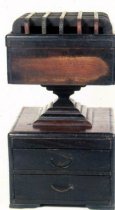
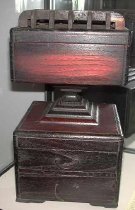
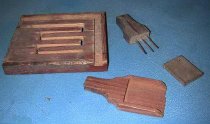
1850 - 1890 Jokoban W/ Spatula Comb Template The kobandokei or incense clock was introduced to Japan from China by Buddhist monks and has been in use at least since the 1st century CE, the earliest form consisting of a simple graduated incense stick. The Incense Seal was developed a short time later (1073 CE), theoretically during the time of a long drought when the clepsydra (water clock) could not be used. The term kobandokei encompasses all types of incense timepieces. The jokoban was used in homes while the jikoban was used exclusively in temples. They differ primarily in the design of the incense trail. This example of a jokoban is made of kiri (cryptomeria) wood which is noncombustible and will not crack. The top section or incense tray is filled with a bed of very fine wood ash and smoothed with the wooden comb. A template (koin) is then held against the corner of the tray and the outline of furrows is traced into the ash. The furrows are then filled with incense using the small spatula. The tray is turned and the template is placed over the next corner until a pattern is create across the entire bed of ashes. Small bamboo or brass markers with symbols of the hours are placed at regular intervals along the path of incense. After the tray is prepared and teh incense lit, the lattice work cover is placed on top. The entire trail of incense of this traditional jokoban will burn for approximately 20 hours. A unique trait of the Japanese kobandokei was the development and use of specialized aromatics rather than markers to indicate the individual hours. The bamboo hour markers were replaced with plastic tablets, each with a different scent. As a marker was reached by the fire of the incense trail a different aroma would emanate indicating the passage to a new hour. the jokoban is still used as a ceremonial piece. |
Maker |
Maker Unknown |
Place of Origin |
Japan |
Notes |
Unlike the Chinese incense seal timekeepers which were made of metal, the Japanese incense seals were made predominately of wood. This incense time seal is called a jokoban and was used in both the home and the temple. (A similar device called a jikoban was used solely in the Buddhist temples.) The top section or incense tray of the jokoban is filled with a bed of very fine wood ash that is flattened and compacted with a tamper (hainarashi). A template (koin) is then held against the corner of the tray and furrows are created in the ash bed as a tracing spatula (osae) is drawn through the pattern. The furrows are then filled with incense using the small spatula. Next, the tray is swiveled and the template is placed over the next corner and the pattern is repeated. Small bamboo or brass markers with symbols of the hours are placed at regular intervals along the path of the incense. After the tray is prepared and the incense is lit, the lattice work cover is placed on top. It takes approximately 20 hours for the entire incense pattern to burn. A unique characteristic of Japanese incense time seals (kobandokei) was the use of specialized scented tablets instead of the typical markers that were used. As the fire reached the marker, a different aroma would emanate, indicating the passage of time. |